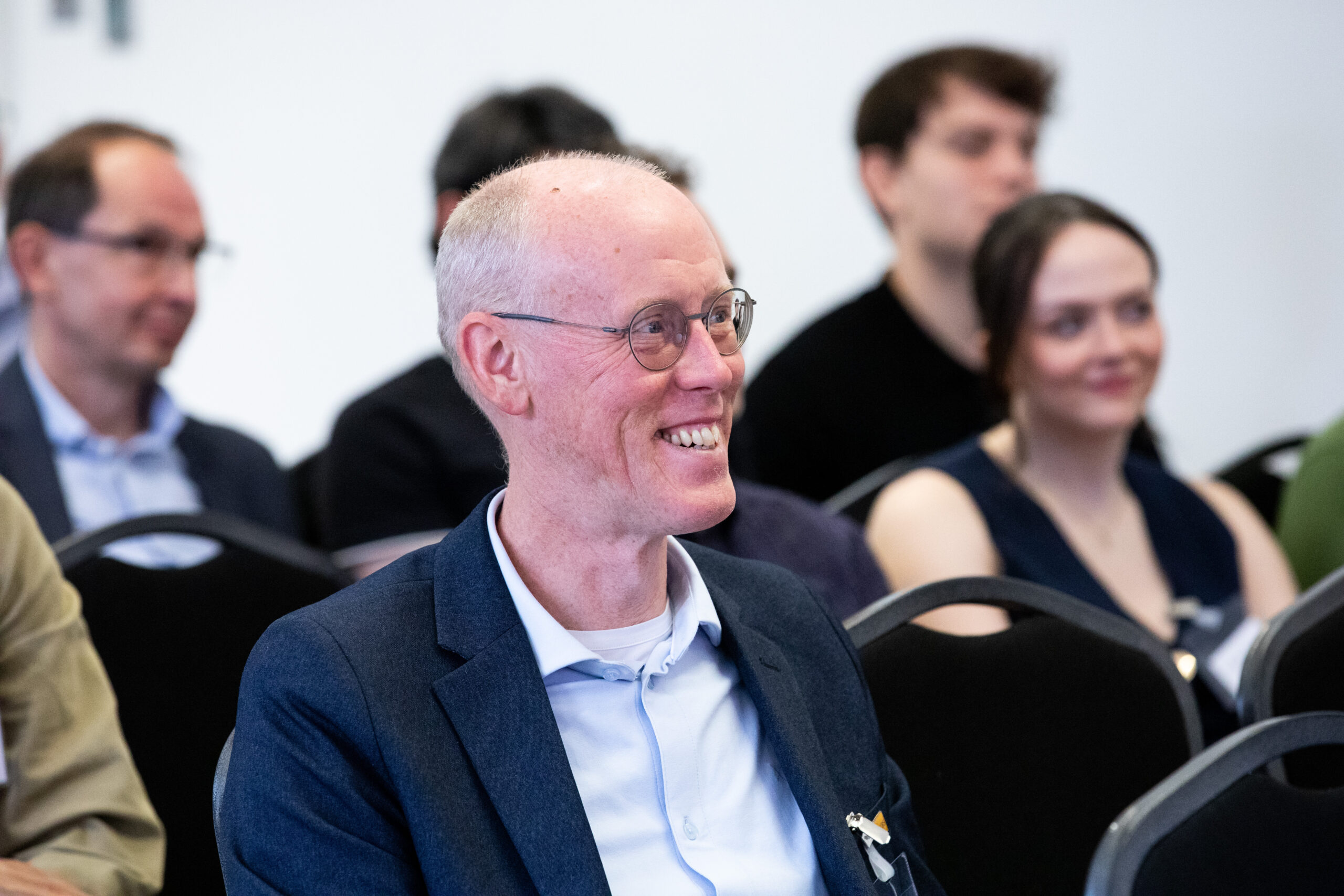
The Mentor Spotlight focuses on some of our amazing mentors that dedicate their time to support the academics across the Northern Triangle. Our first spotlight is on Stephen Tunnicliffe-Wilson, Director of Alliance Consulting and serial mentor.

Tell us a bit about yourself:
As a young Engineer, I worked for Cambridge Consultants before spinning out Inca Digital Printers as one of seven founders in 2000. At Inca, I hired and led the Research and Development team with over 40 engineers designing electronics, software, mechanics and robotics. We developed industrial inkjet machines – like your desktop printer but 10 metres long and printing a 3-metre poster in 10 seconds.
In 2005 we were acquired by Screen of Kyoto, which meant improving our quality systems and becoming more corporate. We evolved into an SME with 150+ staff and around £30m revenue. But we kept our startup culture and launched new products every 2 years, constantly innovating to stay competitive.
In 2019 I became Inca’s fourth CEO and led the company through the COVID-19 pandemic. We had to find new revenue opportunities and slim our business to stay profitable. I also led a pivot to building packaging printers, as the poster printing market was maturing. Our Japanese owner then decided to sell our company, so this time I led the M&A process – identifying acquisition candidates and being grilled on every aspect of our business.
When Inca was sold again, I took the opportunity to start my own business. I’ve spent the last four years mentoring startups and consulting for scale-ups. As a mentor, I help founders to perfect their pitch and value proposition. My consulting involves helping larger technology companies to improve their operations and gain more value from their IP.
Why did you become a mentor with NTMN?
The UK has talented people all around our country, but its opportunities tend to be concentrated in the Southeast. We need to change this.
I hope that my work with NTMN can help more Engineers and Scientists create successful business in the North. This should enable future generations to find good jobs locally without moving away as I had to do.
What advice do you find yourself giving most often to academics?
To build a viable business you will need a competitive edge. Researching your competitors, their products and their IP helps you create a better value proposition. AI makes this much easier these days, so there’s no excuse for not knowing your competitors in both the technical and commercial domains.
What impact do you hope to make with your mentees?
I hope to leave them in a better place than when we started. This might involve helping them improve their value proposition or gaining a better understanding of their target market and its IP landscape.
Often their pitch deck is a good place to start as this will reveal their blindspots. Then we can focus on what will make the most difference to their invest-ability.
What’s been your favourite moment of the NTMN so far?
I’ve really enjoyed all the NTMN sprints where the founders and mentors get to speak in person. It’s great to learn about different technologies and meet the people behind them.
I’ve also found it very satisfying when I’ve helped a founder prepare a great pitch and take their venture to the next level.
What advice do you have for anyone looking to become a mentor?
Moving from managing to mentoring is a big change. As a CTO and CEO, I worked with the senior management team and the board to make the big decisions. Now I’m a mentor, I only offer advice not instruction!
Good mentoring requires a lot more skill than you might realise. It’s helpful to get training in coaching skills such as active listening. This is available from the Association of Business Mentors and other providers.
Any further tips you would like to share?
Learning to read patents is key to understanding the differences between academia and industry. Academics are often judged on their published research. In industry, the inventions that matter are those which provide a commercial advantage. These are often revealed in patents, and sometimes later in marketing literature.
Don’t assume that because your research is world leading in academia that it is also a novel invention. Read around your IP landscape to see what industry is doing!
